
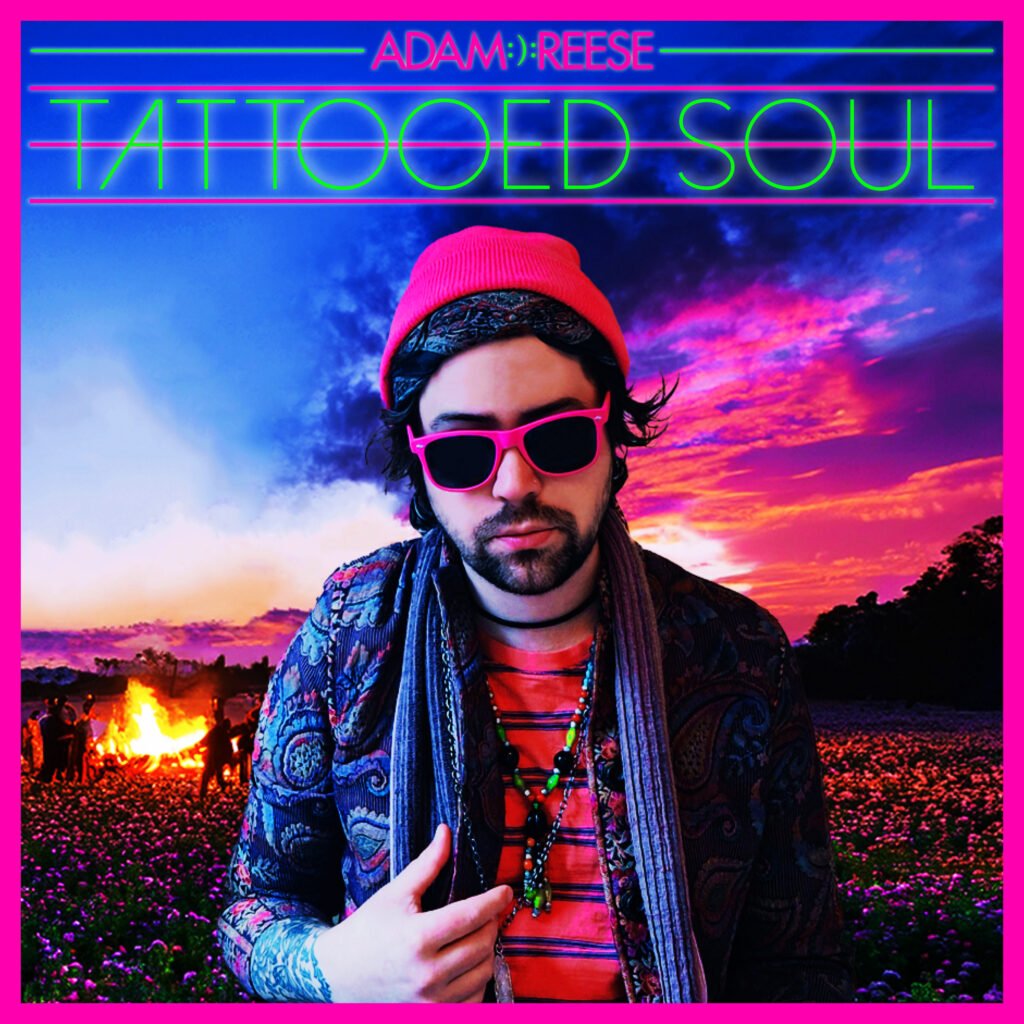
Adam Reese’s Tattooed Soul feels like an album built out of memory, confidence, and the effort to keep moving forward. Across the record, Reese pulls from rock, pop, electronic music, hip-hop, and dance, but the album never feels locked into one sound. It comes across as an artist trying to turn different parts of his life into music that feels direct and alive. The songs are personal, but they are also catchy, with Reese often placing honest reflection inside bright and upbeat production.
The album opens with “The Burbs,” a track that gives Tattooed Soul a clear sense of place right away. The song feels tied to memory and identity, as if Reese is looking back at where he came from while also trying to understand how it shaped him. That mood continues into “Summer Love,” which brings a warmer and more nostalgic feeling to the record. The song has an easy quality, but it does not feel empty. It captures the kind of young emotion that can seem simple at the time but more meaningful when looked back on later.
“Throwback Tracks” keeps the album’s nostalgic feeling going, but in a more direct way. The song feels like Reese is thinking about the music, places, and memories that shaped him when he was younger. Instead of only sounding sad or sentimental, the track has energy to it, which keeps the album from getting stuck in the past. It works because it shows how Reese can look back without making the song feel slow or overly serious.
“Days Like This” keeps the album moving with a lighter and more melodic sound. It works because Reese is able to write something positive without making it feel forced. The track gives the album some room to breathe, especially next to songs that deal more directly with insecurity or struggle. “Loser” brings out a different side of the record. The title is blunt, but that bluntness is part of the key message of the song. Reese does not seem interested in hiding self-doubt. He puts it right in front of the listener and turns it into something recognizable.
The middle of the album leans into memory, youth, and the culture that surrounded Reese’s early years. “The Youth Culture,” “1996,” “The Snapback Kids,” and “Skinny Jeans” all feel connected by the same interest in growing up and looking back. These songs give Tattooed Soul a strong visual quality. Reese is not only writing about feelings. He is writing through clothes, sounds, images, and pieces of a certain time. That detail helps the album feel lived-in instead of vague.
“Don’t Trip” adds another important piece to the record. The message is simple, but it fits with the album’s larger focus on resilience. Reese often writes like someone who has been through difficulty but is still trying to move forward with energy and purpose. That is one of the stronger parts of Tattooed Soul. Even when the album touches on pain, it does not stay there for too long; it keeps pushing toward confidence, movement, and release.
Near the end “ Bad words” and “Tattooed Soul” bring the album closer to its emotional center. The title track feels especially important because it captures what the record has been building toward. A tattoo is permanent, and the soul points to something deeper than style or image. Together, the phrase suggests the past leaves marks, but those marks can become part of a person’s strength. Reese uses that idea to give the album a clearer sense of identity.
Overall, Tattooed Soul is a strong debut because it sounds personal without becoming weighed down. Adam Reese shows that he can mix emotional honesty with catchy production and a wide range of influences. The album works best when he blends nostalgia, resilience, and self-expression into songs that feel both reflective and easy to return to. Tattooed Soul introduces Reese as an artist with a clear voice and real sense of what he wants his music to say.
Written by Samuel Lind