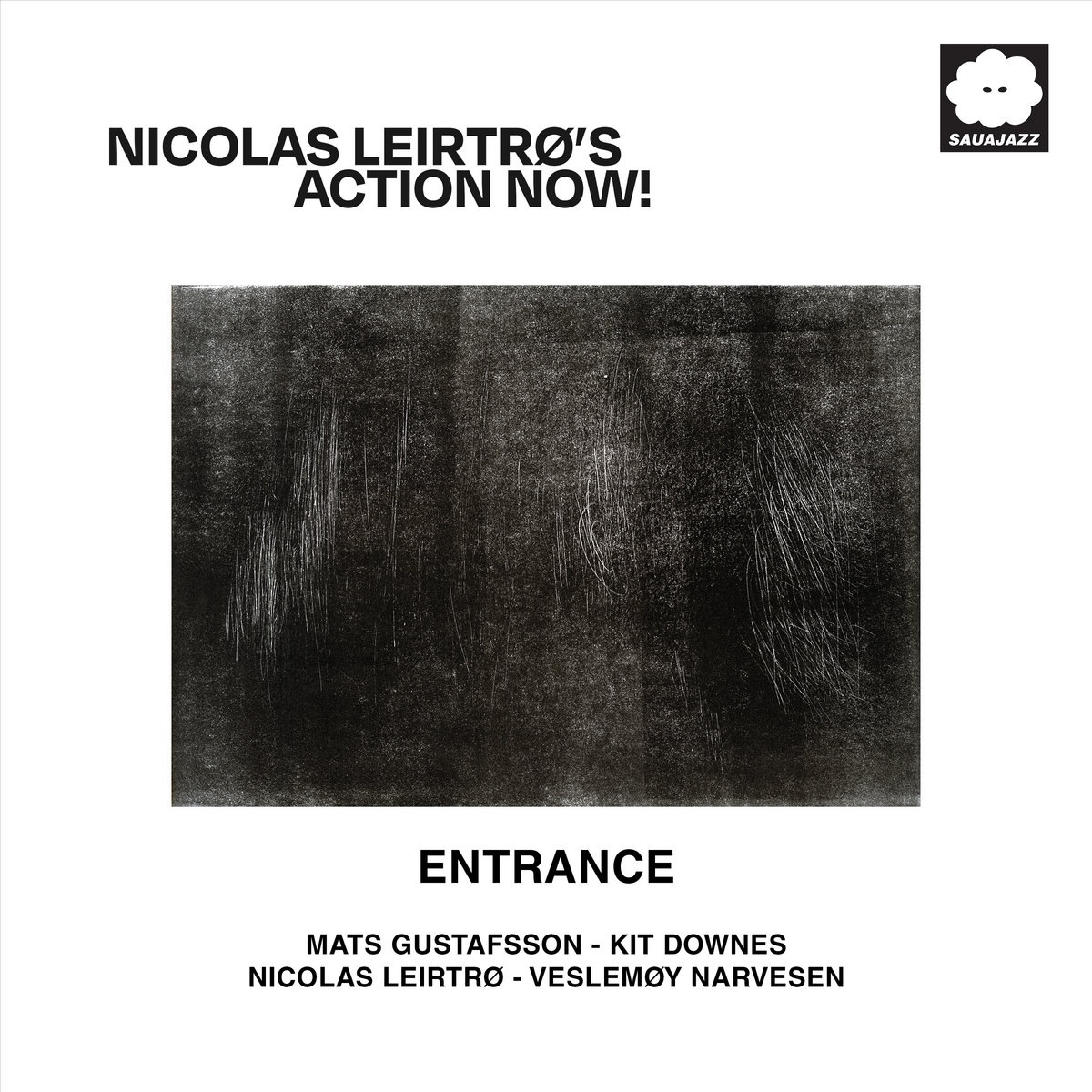
Nicolas Leirtrø’s debut LP has been a while coming, and its precise nature could not have been predicted. The Trondheim, Norway-based multi-instrumentalist has been working in a diverse selection of Scandinavian music ensembles for the better part of a decade. He’s the baritone guitarist for I Like To Sleep (which balances post-bop jazz with heavy prog rock) and the Teip Trio (which mixes near-metallic sonorities into free improvisation). He’s also a stalwart acoustic bassist in saxophonist/composer Amalie Dahl Dafnie and free-jazz saxophonist Ville Lähteenmäki’s trio, not to mention a guitar foil for singer/songwriter Maria Norseth Garli. So, which side of Leirtrø would Entrance present?
All of them, it turns out—but not all at once. The record’s first impression might appear to be a pledge of allegiance to free jazz, but there’s a canny and catholic compositional mind at work that shows itself a bit at a time over the LP’s four sides. Leirtrø sticks to double bass throughout, and the combo he’s assembled looks fully capable of delivering full-steam-ahead free jazz. The lineup tags Leirtrø as a growth-oriented artist, since he’s surrounded himself with musicians who can hold his feet to the fire.
Drummer Veslemøy Narvesen is a trusted peer. She and Leirtrø have worked together in several other bands, and she’s adept at applying percussive color around his sturdy lines. The other two players offer decades of experience and contrasting personalities. Mats Gustafsson brings intensity and improvisational aplomb. On baritone sax, he looms over the music like Godzilla above a block of doomed buildings, while his flute is a fleet and flexible presence. Keyboardist Kit Downes sticks mainly to organ on Entrance. He doesn’t dominate like Gustaffson, but he instead operates along a spectrum between intricate counter-lines and near-boiling masses of sound. Their chemistry is more complementary than pugilistic.
There’s more to Leirtrø’s compositional concept than casting, though. While the music is often wooly, it’s also mapped out, with bold saxophone melodies and assertive organ riffs that make you suppose that he’s drawn some lessons from Deep Purple as well as Tony Williams’ Lifetime. There are also passages where the heavy drapes are pulled back to reveal Narvesen and Leirtrø’s mastery of texture during generous solo passages. Each track tells you something different.
Entrance’s measured intensity and vivid performances whet your appetite to catch Action Now! in concert. Given the busy schedules of its participants, not to mention the state of the world, however, heavy touring outside of Europe probably isn’t in the cards. But Entrance’s strong sequencing also makes it an experience worth revisiting again and again. [Sauajazz]
—Bill Meyer