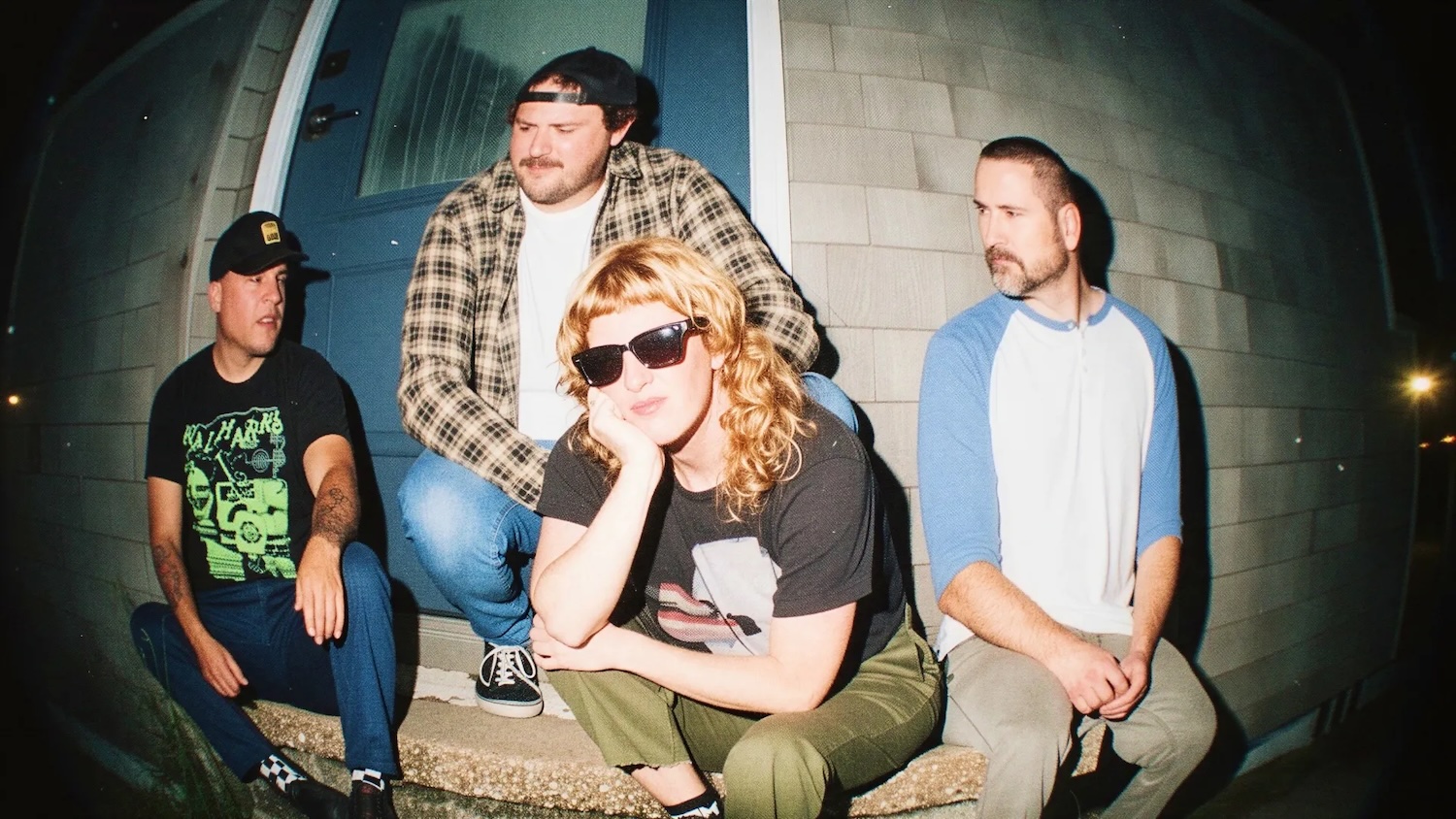
From the get-go, post-hardcore icon J. Robbins homed in on something in Cor De Lux’s collaborative chemistry that reminded him of the “beautifully illogical” give-and-take of bands like Sonic Youth, Scratch Acid and early Butthole Surfers. So when the former Jawbox frontman got the North Carolina-based band into his Magpie Cage Recording Studio in Baltimore, his goal was to make an album that accurately conveys what it feels like to experience Cor De Lux playing together in real time. Geographically isolated on the Outer Banks but hardly out of touch, the quartet has spent years developing its sound through improvisation, collaboration and a decidedly DIY approach to making and releasing music. That philosophy continues to serve the band well on Year Of The Horse, its third LP and first for revered indie imprint Ipecac.
With Robbins’ help, Cor De Lux builds on its combustible mixture of post-hardcore, shoegaze and unpredictable guitar interplay. For a band that prides itself on creating without ego, signing with Ipecac hasn’t meant surrendering a sliver of creative control. Cor De Lux still shoulders much of the work that helped build its following, from merchandise and radio outreach to maintaining direct relationships with fans.
And though the group takes its music seriously, its members clearly haven’t lost their sense of unscripted humor, as MAGNET’s Hobart Rowland discovered in a recent chat with singer/guitarist Dawn Moraga. Cor De Lux kicks off its tour in Philadelphia tonight.
Cor De Lux came together in Kitty Hawk, N.C., pretty far removed from the traditional centers of the music business. How did that geographic isolation help you become the band you are now?
Smaller towns aren’t a detriment. The support that a small community can offer can give you wings. I’m not saying we don’t feel the most comfortable in a dark bar in a city—because we do. We often feel our music needs to be born in the quiet but raised in the city. We start our practices with a jam-improv time to loosen up and think about nothing … therapy. The songs are all born out of this. When we hit on something, we all smile—and if it sticks, we build upon it. Some songs are only there for that moment, some make it to the city, some die crossing the road. But some make it to vinyl.
J. Robbins has spent decades recording bands that thrive on an interactive approach. What did he grasp about Cor De Lux that helped him capture your live intensity without polishing away the unpredictability?
Hmmm, I don’t know. Let’s call and ask him. One second …OK, straight from J.: “Once I heard your music and we started talking, I just wanted to work with you guys. In the songs, I can hear some particular collaborative things that just click in a way that’s really rare. I felt a connection there with music that I’ve loved going back to the ’80s, including more obscure bands like Ed Hall or Nice Strong Arm—Homestead Records-era bands. It wasn’t so so much a specific sound, but in an energetic way … not wanting things to sound like they just came “off the rack,” you know? I feel like your music comes quite directly from you guys. I can feel you trust your own process, and I trust that. Plus, I felt like there was something sonically—and especially energy wise—that you were going for that previous recordings hadn’t quite captured. I thought I could kind of hear that in my head, and I really wanted to try to make it happen.”We just cried a little.
“Blind Smile” hinges on the image of someone who can’t see, smiling while everyone else fights over trivial differences. What drew you to that striking image?
Sometimes people can’t see what’s in front of them anyway—including us. I’m not saying we’re superior. It’s just saying I’ve learned lessons from those with a handicap—whether it’s a human or an animal—being aware of their surroundings in a demeanor that’s quite different and powerful. We often want to draw away from the distractions and loudness and find the ability to listen to the earth and world in a way that doesn’t involve dissections or instant opinions. There are times I sit in the water when I surf, surrounded by nothing but water, air and nature, and I melt into that place.
You describe the band as creating “without ego.” Presumably, that means occasionally sacrificing an idea you love because the collective instinct is headed somewhere else. Can you give us an example?
(Drummer) Jacob (Richardson) tried to introduce a cowbell the other day in practice, and we sat down together to watch “More Cowbell” on SNL. Ironically, Jacob does an amazing Christopher Walken impersonation. I might’ve hidden the cowbell while cleaning the room yesterday … accidentally. No, but on a serious note, we try to incorporate ideas and then talk. There’s a new song we’re just starting to play live, and me and Jacob convinced (singer/guitarist) Tim (Lusk) to leave a part. There was a dropout where I play something very angular, and then we all come together. Tim wanted a bigger build. We compromised and added a bigger build before the drop-off. We just needed to lay down more cowbell.
You’ve spent years building Cor De Lux organically. Now that Ipecac gives the band a larger platform, how do you take advantage of that opportunity without losing the outsider mentality that fuels the band?
They’re the perfect label to feel completely yourself. There’s not a wizard behind a curtain telling us what to do or be—but it’s more or less our yellow brick road. We’re so fortunate and will continue the DIY work with our fans, radio, merch and media content, because we love doing that. Period.
See Cor De Lux live.