[ad_1]
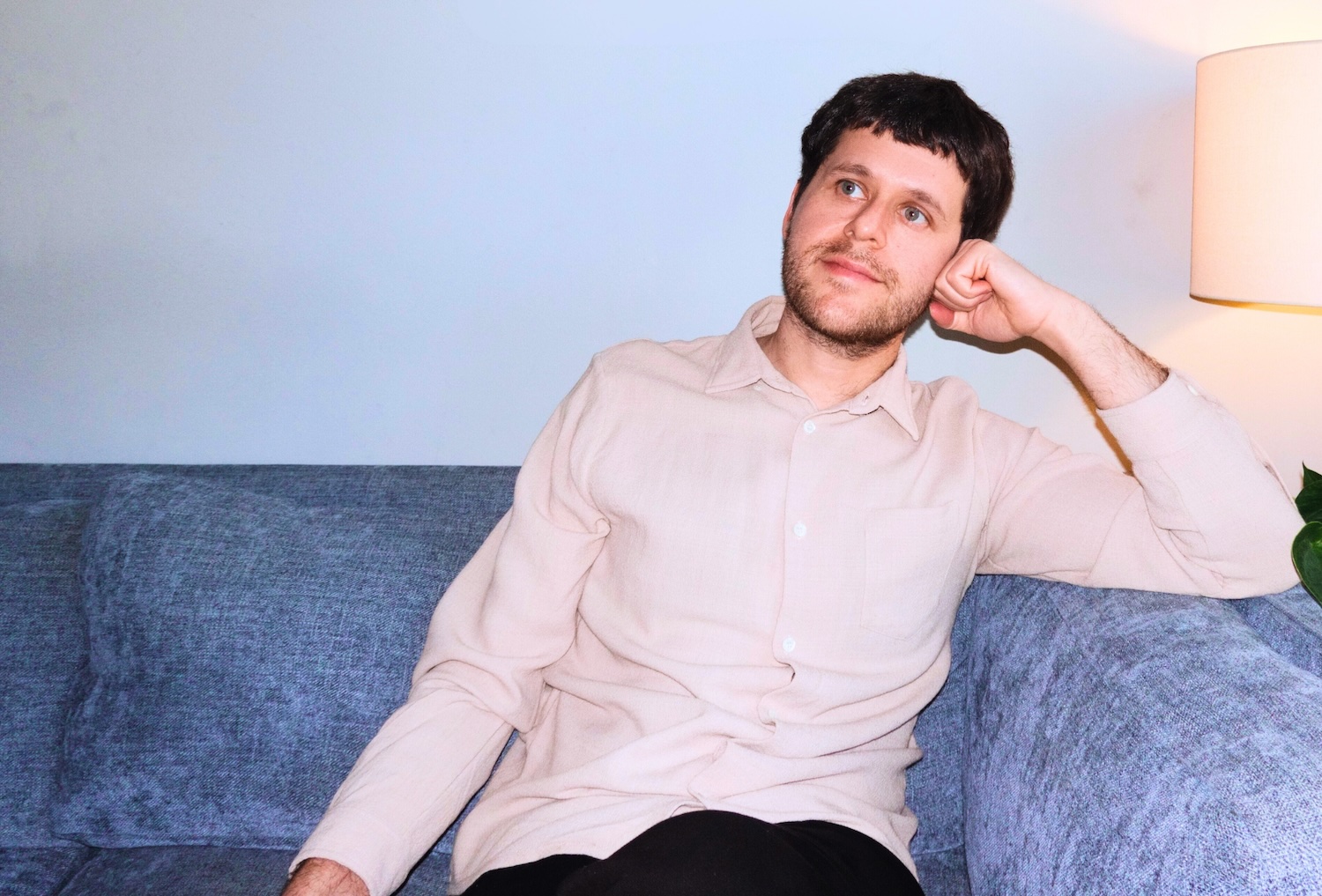
Stephen Becker has always taken a diarist’s approach to songwriting. On his self-produced fourth LP, Gravity Blanket, the New York City-based singer/songwriter bleeds meaning out of the most ordinary detritus of everyday life, melding homespun indie rock with the elastic production of art pop. Becker has already established himself as an accomplished multi-instrumentalist and in-demand sideman, touring with Rubblebucket, Vagabon, Katie Von Schleicher and others. He’s also worked as an engineer at Brooklyn’s Figure 8 Recording, assisting producers like Shahzad Ismaily (Marc Ribot) and Philip Weinrobe (Adrianne Lenker).
Gravity Blanket’s small circle of trusted collaborators includes drummer Jason Burger (Big Thief, Vanessa Carlton), pianist Michael Coleman (Chris Cohen, Sam Evian), saxophonist Nora Stanley (New Pornographers, Cassandra Jenkins) and vocalist Joanna Schubert (Barrie). Drawing on indie touchstones like Grizzly Bear and Elliott Smith, Becker fashioned a dozen concise earworms enhanced by clever arrangements. All in all, Gravity Blanket marks his most confident leap yet, capturing a life whose revelations reveal themselves via the ongoing process of noticing—and that’s a revelation in itself.
Becker unpacks Gravity Blanket below.
—Hobart Rowland
1) “Bad Idea”
“I wrote ‘Bad Idea’ just after a sudden breakup at the New York City Ballet a couple years ago. I was in my early 30s and starting to notice some unhealthy patterns in my love life and my personal life, which had me wondering about change—how it happens, whether it’s even possible. On the subway ride home, the dancers’ movements started to take on this ominous, haunting quality in my memory. I wrote the first verse on my phone right there, the bittersweet taste of those fancy lemonade cocktails still lingering.”
2) “Careless”
“This song is a mediation on the difference between being careless and caring less. It’s a subtle distinction I used to fuel some animosity while working on it, kind of like the therapy practice of writing an angry letter you never send. There’s frustration here, but also some optimism. I do find it helpful to reframe people’s hurtful actions as carelessness. It’s less intentional and direct, less about me and my ego. Musically, I was thinking about Deerhoof and Sheer Mag, particularly the guitar riff in the post-chorus.”
3) “Midair”
“Perhaps my favorite one on the album. I wanted to center the lyrics and emotions, so I kept the chords as simple as possible. I also wanted to do away with traditional song structure—that verse/chorus tango we often autopilot into. It ends up feeling less like a song and more like a monologue … very diaristic, a kind of rabbit-hole story that starts with heartbreak and ends with me as a kid in the Grand Canyon. At that age, I used to do this thing where I’d walk around pretending I was making a movie, entirely in my head. Looking back, it was this hyper-imaginative activity—long before the dark days of kids glued to iPads. The music builds as I sink deeper into those memories, crescending into these huge, fuzzed-out guitar chords and cavernous drums.”
4) “Mt. Olive”
“A song about my teenage years growing up in Los Angeles. It’s semi-fictionalized and playful, taking place across the city from freeways to beaches and back to the hill I grew up on, Mt. Olive. In reality, it’s called something else … something similar. I was thinking back on my formative years with my friends, smoking joints in parked cars listening to (J Dilla’s) Donuts and (Grizzly Bear’s) Yellow House. We were young and dumb, and it was a magical bonding time. The chorus is more about me trying to carry that energy into the present—into this grownup world that feels increasingly colder and harsher every day.”
5) “Bike”
“I wrote ‘Bike’ while walking around my neighborhood in Brooklyn. I’d left my bike locked up outside my apartment for a long time and started to feel bad about it, so I recorded this voice memo of me singing the melody and lyrics—initially as a reminder to bring the bike inside. Later, it became the first verse. That same night, I had a dream that I died, but my ghost was still around to see people’s reactions to my death. It was similar to a truly psychedelic Hey Arnold! episode I remembered seeing as a kid. Ultimately this song is about facing hard truths when it’s much easier to wish them away. I started biking again recently. It feels nice.”
6) “Emergency”
“I wrote this many years ago but never recorded it. I don’t remember what it’s about, but it’s fun to revisit because the verses jump around these fragmented thoughts and feelings I was having at the time. I connect the dots of what it’s about differently each time I hear it. I recorded it all in one day, very last-minute. I remember having fun with that limitation. It forced me to use a lot of first takes and be super-unfussy about the process.”
7) “Sinking”
“There’s this great video of the jazz pianist Oscar Peterson playing early synths in the ’80s where he talks about how the sound of the instrument deeply influences what you play. As an exercise, I wanted to write a song that started from a sound. It ended up being a swell effect that’s a combination of a few different guitar pedals. Generally speaking, it’s a slow-attack swell with a vibrato, a pitch shifter and dark reverb. From there, the words started to flow—lyrics that also felt influenced by the sound. The song is littered with pieces from my life: cold brew, solo cups, the willow tree on Sixth Avenue, a book called Mars.”
8) “I’ll See You Around”
“Another breakup song. I was exploring some fun harmonic concepts and trying to implement them into my songwriting—definitely a lot of ECM modern-jazz influence here in the composition and the sound world. The main lyric and title of the song is something I found myself and others saying amid breakups. It’s a strange and dissonant phrase we tend to say when we don’t actually expect to see someone ever again. The song is about that paradox.”
9) and 10) “[pogo stick]”/“Nerve”
“I’m a pretty clumsy guy—it’s kind of a running theme on Gravity Blanket. I wrote ‘Nerve’ after a particularly frustrating series of injuries I somehow sustained entirely from the comfort of my own home. It was always small, random stuff: cutting my finger on a piece of cardboard, bumping my head on the shower handle, burning my hand with hot water. At a certain point, I started to wonder if I was letting it happen—like the way we let people treat us poorly because we’re nonconfrontational. The doormat analogy felt too obvious, though. For some reason, I kept coming back to this image of a pogo stick—those little, repetitive hops on this clunky machine. Incessant, slightly evil … It felt closer to the truth.”
11) “Tongue-Tied”
“‘Tongue-Tied’ is a special one for me and kind of an outlier. I wrote it on piano—specifically on my little out-of-tune, creaky Melodigrand in the living room. I think I was channeling a lot of feelings about the state of the world—the failures of U.S. politics, global wars, ubiquitous mental-health crises—watching it all unfold on the internet and just feeling speechless. It’s hard to know what to do or say about such monumental issues, especially as a songwriter who mostly writes about himself. The track was initially just piano and voice, but it was clearly missing something, so I went up to my friend Adam Hirsch’s studio in the mountains outside L.A., and we added these gnarly drums and synths to try to capture that overall feeling of outrage and desperation.”
12) “Now, But Not Forever”
“I was trying to write a ballad and love song that distilled some big feelings into a simple phrase and form, something many of my favorite jazz ballads do. I was thinking about Chet Baker and João Gilberto—breathy, direct, serene, almost deadpan. The song is about letting yourself feel the pain of heartache so you can feel better later. I wrote it lying down in my bed.”