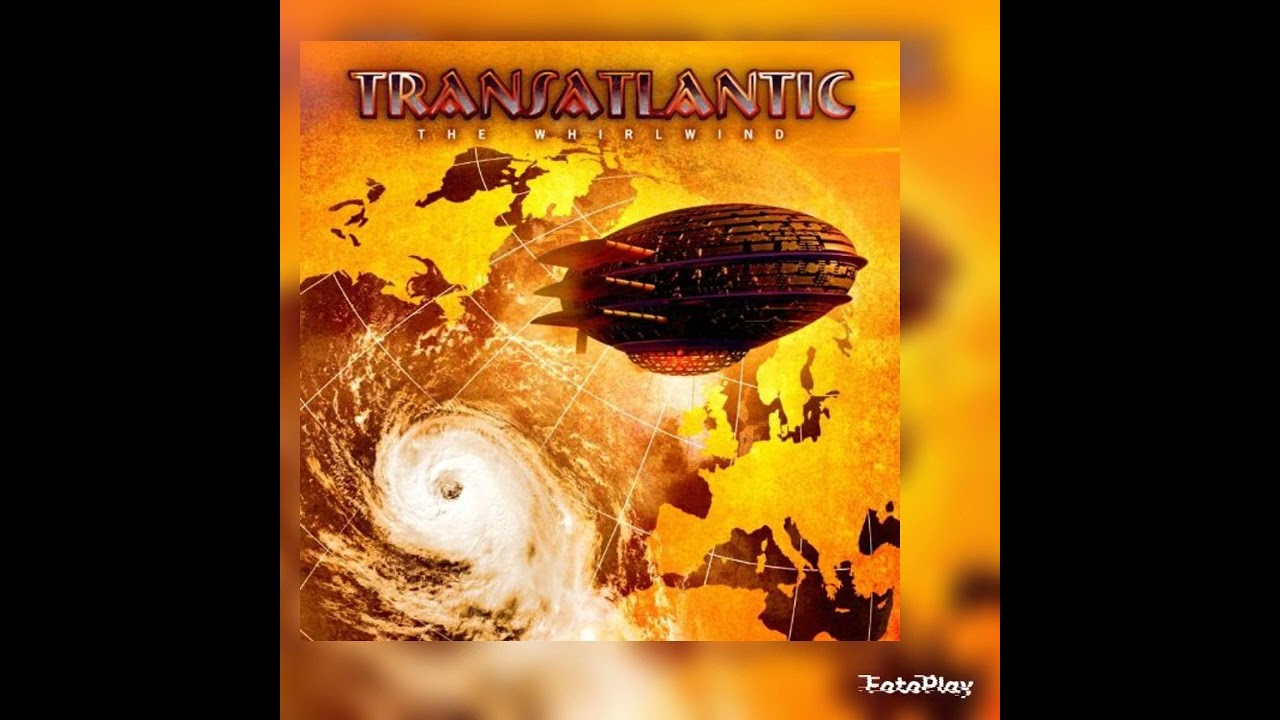
When Neal Morse left prog supergroup Transatlantic to pursue his religious callings, fans and band alike thought it was all over. But in 2009 he, The Flower Kings’ Roine Stolt, Dream Theater’s Mike Portnoy and Marillion’s Pete Trewavas returned with third album The Whirlwind, to both surprise and acclaim. That year Morse and Stolt told Prog how it had come about.
When Neal Morse ditched Transatlantic in 2002 to go and create music that promulgated his Christian faith, fans of the supergroup and its members – Mike Portnoy, Roine Stolt and Peter Trewavas – believed it was the end of their story. But in 2007 the keyboardist began to have a change of heart.
“A couple of things happened,” he says. “I was having dinner with a friend who’s not a big fan of progressive rock, and for some reason he blurted out that I should do another prog epic with Transatlantic. It was strange, and it did get me thinking. Then I wrote a demo called The Whirlwind, and it sounded ‘Transatlantic-y’ to me. I prayed, and began thinking that maybe it was God’s will that this was the direction.”
Latest Videos From Louder
Stolt remembers: “Neal sent out the Whirlwind demo and asked if we were interested in doing another Transatlantic album. The rest of us had been waiting for it to happen. As time had gone by I thought it wasn’t going to, so it was kind of a surprise. We all said yes immediately.”
Demos were exchanged, and once schedules had been balanced the band converged on Morse’s Nashville home studio in April. “We thought the best thing to do was get together and see what happened,” he says. “Some of the guys had flown considerable distances so I thought they’d need some rest – but we started work the very first night and got the whole album sketched out; all the major themes were in the works. It only took us four days to write it. We work really fast when the inspiration’s there, and we took certain parts straight from the demos we’d sent each other.”
“That was very quick for me,” Stolt reveals. “People ask what it’s like recording with the band. Well, you get into a room and the bits just seem to fall into place, like a miracle. We’re never short of ideas, which is the main thing.
“Mike is sometimes seen as a drummer boy, but in fact he’s an intellectual. He conducts the band. There are lots of great drummers out there but there aren’t many like him; he can look at the different pieces and arrange the ideas into a cohesive whole.”
Morse agrees: “Mike’s a take-charge guy. He’s very good at picking the best parts of other people’s demos and figuring out how to arrange it, like a really good producer would. And then, of course, his drumming is unbelievable.”
The band are collectively credited for all songwriting, and Morse has been disheartened by the tendency of reviewers to attribute much of the work to him. “People would be surprised by how much is written by Pete,” he counters. “The main theme in the overture is his, and the very first vocal is his melody, sung by Roine. Pete threw out a lot of the chord changes on Is It Really Happening? His bass playing’s amazing too – nice and loud in the mix. As for Roine, he’s so creative. He came in with A Man Can Feel and we played that just as it was on his demo.”
He continues: “Transatlantic is a collaboration. I think that’s what makes it different; otherwise it’d sound like a bunch of guys playing my or Roine or Pete’s music. Most of the time it’s exhilarating, with tons of ideas going round. Once in a while it’s challenging: if the whole band’s pulling in one direction and you don’t agree, you don’t have any choice. That happened a few times, but the good things far outweigh those moments.”

“A band is always a compromise,” Stolt notes, “but everyone felt they had a chance to get their voice heard. We’d all grown a bit; we were all more ready to give and take and not push our own ideas too much. We were really listening to each other, and that comes out in the music.”
It would be disingenuous to imply that Morse’s withdrawal from Transatlantic – and also his main gig with Spocks Beard – led to a rift between the players. But if fans were bewildered as to his motives, so were some of his colleagues. “I was puzzled,” says Stolt. “It just came out of the blue. To this day I’ve never understood why we couldn’t keep making music. Neal had been working really hard to push sales and get more people to the concerts, and once people were raving about us he just said, ‘I’d like to stop now.’”
That’s the good thing about art – you can do whatever you want, and if you do it with conviction it makes sense
Roine Stolt
He adds: “I very much respect it, though; if it isn’t right you shouldn’t be in a band. But I never saw anything evil in the music we were making. It’s not like we’re a Satanic black metal band! But I’ve never wanted to put him against the wall and ask why. We never spoke about it, and we haven’t mentioned it since. It was his decision to make.”
Morse explains: “I felt like it was time for Transatlantic again; that’s what was wanted. God was putting people and things in my path to point me in this direction. I wouldn’t have done it otherwise.”
It’s hard to extricate his faith from The Whirlwind’s lyrical themes of apocalypse, exodus, sacrifice and – in the rapturous closer Dancing With Eternal Glory – redemption. “The concept of is that you’re in a confused state,” he says. “It could apply to your personal life or to things happening in the world. God will sometimes put us in a state of confusion for His purposes, for reasons we don’t understand. It’s only when we step back later we can see how He used it. Sometimes we have to get a little off our own ground before we’ll seek Him.
“But we approached the concept in a very abstract way; there are many facets of it on the album. The fact that my lyrics and Pete and Roine’s ideas fitted with the concept was what I would call ‘providential.’”
Ever the agnostic foil, Stolt counters: “Some of the lyrics I’d had lying around for a year, but they coincidentally fitted with the concept. That’s the good thing about art – you can do whatever you want, and if you do it with conviction it makes sense. ‘I love you baby’ rock lyrics can only be seen one way; but with, say, Genesis’ Supper’s Ready, or some of the things John Lennon wrote when he was on LSD, they can be about anything.
“It triggers your imagination. It’s interesting stuff. It probably means different things for different people. The Whirlwind is open to interpretation, and that’s part of the excitement.”