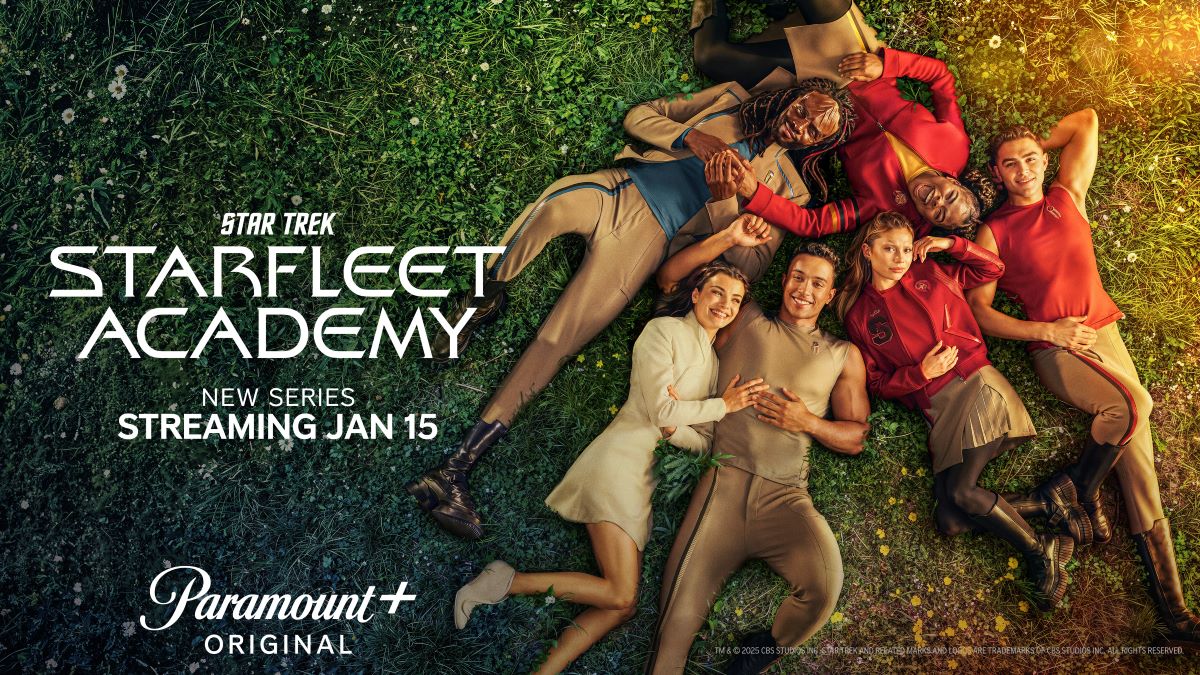
The newest Star Trek TV series, Star Trek: Starfleet Academy, premieres on January 15 on Paramount+ with a two-episode event.
Spinning off from modern-day Trek’s flagship, Star Trek: Discovery, Star Trek: Starfleet Academy will follow the adventures of a new class of cadets aboard the teaching vessel, the U.S.S. Athena.
But first, one more time for the folks in the back: Star Trek has nothing to prove.
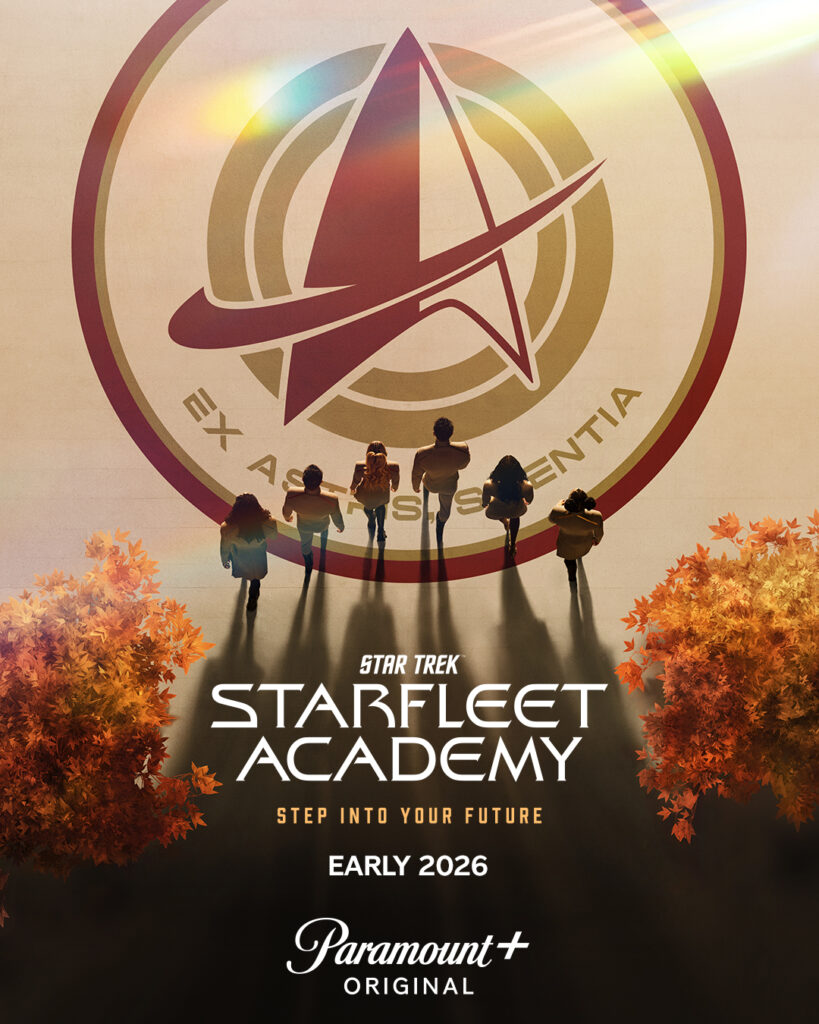

The franchise has been going strong for 60 years, and while the business side has been and remains complicated, the fandom has never been anything but all-in.
I’ve been a Trek fan since the days of Star Trek: The Next Generation and have been deeply invested in the recent series run since Star Trek: Discovery‘s premiere in 2017.
But, if I’m honest, the announcement of Star Trek: Starfleet Academy filled me with some trepidation. Let’s unpack that, shall we?
A Little Background
The tenets of Star Trek have always been two-pronged, both intentional and philosophical. Primarily, as the catchphrase goes — correcting for the split infinitive — Trek’s mission is “to go boldly.”
Under that umbrella of exploration and expansion lies the vision of “infinite diversity in infinite combinations.”
The bottom line is that anything is possible in Star Trek. And that’s what has always drawn me and so many generations of fans to the world.
It’s never been about perfect people in a perfect future. For decades, Star Trek has reflected contemporary society, warts and all.
Where It Started


And as society became more complex, that reflection evolved with the times.
Star Trek: The Original Series (TOS), Star Trek: The Animated Series (TAS), and Star Trek: The Next Generation (TNG) were episodic, anthological adventures focused on the crew of the U.S.S. Enterprise.
In 1993, Star Trek: Deep Space Nine (DS9) introduced a space station as its central setting. Still mostly episodic, DS9 introduced more serialized narratives in its later seasons, dealing with the Dominion War.
Star Trek: Voyager (VOY) launched in 1995, stranding the U.S.S. Voyager and its crew in the Delta Quadrant (a long way from Federation space), with a long-arc mission to get home, while surviving amongst new alien species and outside the jurisdiction of Starfleet.
The last of this batch of Star Trek series premiered in 2001. Star Trek: Enterprise (ENT) was pitched as a prequel series, chronicling the crew of the NX-01, the first Earth-built vessel capable of Warp 5, in the era after first contact and before the formation of the United Federation of Planets.
Where It’s At


When ENT’s 2005 finale ended with a torch-passing to the TNG era and the historic establishment of the Federation, in a ham-fisted attempt to bookend the Star Trek franchise, many thought that was it for Trek.
Alex Kurtzman and his Secret Hideout production company proved them wrong with the release of Star Trek: Discovery (DIS) on the Paramount+ streaming service in 2017.
Despite competing with Fox’s Trek-homage comedy The Orville and introducing a darker, serialized narrative focused on a single character, Sonequa Martin-Green’s Michael Burnham, instead of an ensemble.
DIS proved itself through complex plots, intriguing characters, and high-intensity, cinematic-quality action.
DIS paved the way for Star Trek: Picard (PIC) and two animated series, Star Trek: Lower Decks (LOW) and Star Trek: Prodigy (PRO), while spinning off Star Trek: Strange New Worlds (SNW) and the feature film Star Trek: Section 31.
DIS literally carried the franchise into the future, travelling into the 32nd century.


Star Trek: Starfleet Academy
And that brings us to the newest series and the first to spotlight untested, sometimes remedial, Starfleet Academy cadets.
The pitch first became a possibility after DIS’s Tilly left the U.S.S. Discovery to help Starfleet re-establish Starfleet Academy in the post-Burn era.
While I look forward to seeing Tilly again, the mere idea of Starfleet Academy bothered me for multiple reasons.
First and foremost, I like the people flying starships to actually know what they’re doing. I wasn’t looking forward to a Hogwarts-in-Space vibe, with the cadets crashing and blowing things up in the process of learning.
Also, I know schools and school stories all too well.


The tropes of classmate relationships, bullies, and instructor-student dissonance are fine and dandy in their place, but I cringed at how much (more) unnecessary drama would find its way onto the bridge or into engineering.
Let’s not even try to imagine the shenanigans in the Jeffreys tubes. Yeah, I’m also not here for Star Trek: 90210.
Star Power
Then the casting was announced. Holly Hunter. Paul Giamatti. Tatiana Maslany. So impressive. So worrying.
Star Trek has never needed marquee names to attract viewership. American audiences had no idea who William Shatner, Patrick Stewart, or Avery Brooks were before they debuted as Starfleet captains.
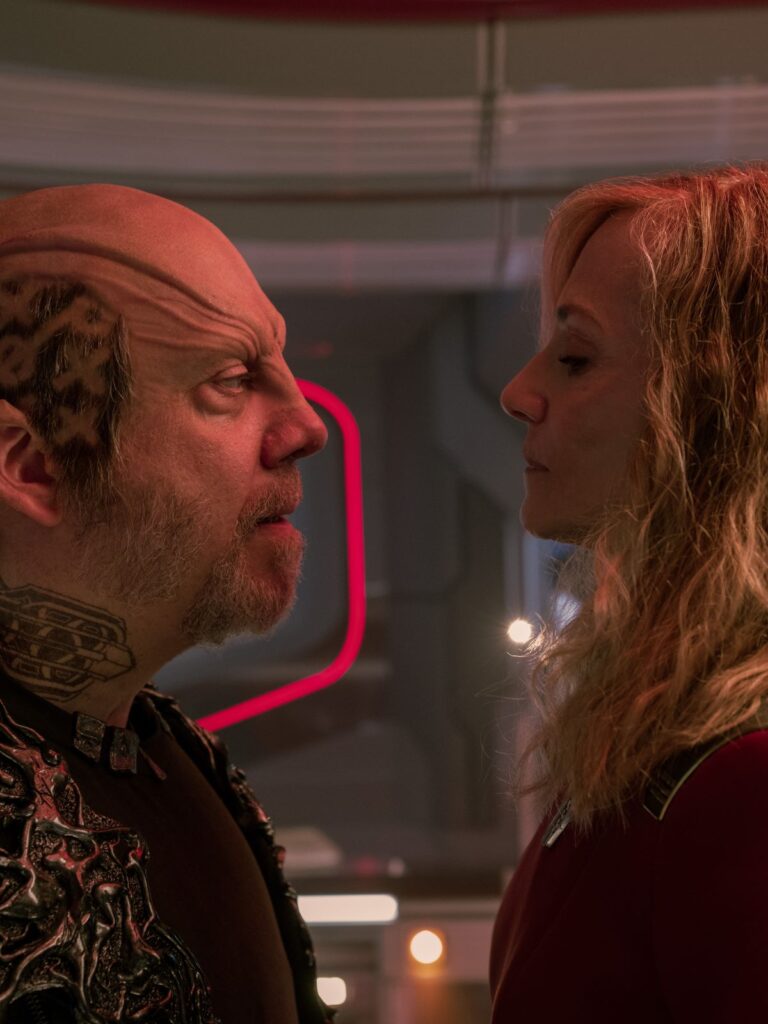

What are we building towards with this powerhouse casting? Does it underscore a lack of confidence in the strength of the core cadet dynamic?
I love that Robert Picardo returns in SFA to play The Doctor, and absolutely ecstatic that Tig Notaro will reprise the role of Jett Reno.
Tilly and Vance’s inclusion also lends to the continuity. But these are established Trek characters. When LOW brought in cameo stars, they were Trek canon. Hunter, Giamatti, and Maslany were red flags for me.
The Big Bad
Historically, Star Trek series have had recurring bad guys. Individuals with axes to grind with the Federation, personal gripes with certain crew members, maybe delusions of intergalactic domination or destruction.
Mostly, the Federation has had ideological conflicts with other species or organizations.


Paul Giamatti’s Nus Braka appears to be a villain of a different ilk. He comes in with history and longevity. While calculating and grasping, Braka is also brazen and unhinged.
Being a school story, we expect a serialized story as the cadets grow in their learning and experience.
But introducing an antagonist whose presence shapes many of those educational moments with trauma and chaos feels gimmicky and decentralizes the plot.
Lying Down On The Job
My most recent concern for SFA reared its head with the release of the Season 1 key art. I’ll be the first to own that it’s a fairly superficial complaint, but why are they lying down?
(The online response went further, questioning the cuddle puddle pose, but I personally hope to see a real spectrum of relationships represented on SFA. Bring on the polycules!)


Star Trek’s message is aspirational, and, without exception, every series teaches that making that message a reality takes ENERGY.
Star Trek posters feature faces conveying determination, hope, and triumph. No one’s lying down. No one’s just chilling. There’s nary a grassy knoll in sight.
So, what the heck? A poster is a promise. What are they saying Star Trek: Starfleet plans on delivering? What is the theme we can infer here? Where’s the adventure, the exploration, the challenge?
Ad Aspera Per Astra
Basically, my anxiety is because hope is a fragile thing.
More than anything, I want each subsequent Star Trek series to push those boundaries the franchise broke ground on 60 years ago. Represent those who don’t get seen enough. Let love be love. Give voice to the silenced.


My core fears stem from the FINO (Fans In Name Only) pushback against the ground DIS, PIC, and early SNW broke in IDIC.
I worry that SFA will be full of general, mainstream, pacifying messaging, soft-filtering the mirror Trek holds up to society.
But I want to be proven wrong. I want SFA to be the next step toward a hopeful, unified world where all beings feel included and safe. Where every voice is heard.
So, show me what you’ve got, Star Trek: Starfleet Academy. Let’s fly.
Let’s keep the conversation going — it’s the only way the good stuff survives.
Say something in the comments, share if you’re moved to, and keep reading. Independent voices need readers like you.
-

Doc’s Emma Pfitzer Price teases Hannah’s unraveling and previews two exclusive clips and an explosive hour
-

We’re still not over Heated Rivalry, so we had to keep talking about it. Read TV Fanatics Whitney Evans and Jasmine Blu’s breakdown of the first season!
-

Doc’s Scott Wolf is returning to the series and also directing. Find out what he has to say about taking a spin in the director’s chair here!
-
Star Trek: Starfleet Academy premieres this week, and I have never been so worried about a Trek premiere. Read why and tell me I’m wrong. Please.
-
There are still more dungeons left to explore and dragons to fight, if Stranger Things goes the spinoff route!
TV Fanatic is searching for passionate contributors to share their voices across various article types. Think you have what it takes to be a TV Fanatic? Click here for more information and next steps.