
There was a time when watching TV meant sitting down, giving your full attention to a show, or excitedly dissecting it as it was happening with another person.
Hell, we already talked about watercooler shows and what it was like watching series that made you eager to converse with people after the fact.
But now? Ironically, watching TV often means … not watching it at all.
Drowning Out the Noise Takes Precedence
We’re all guilty of it.
We fire up Friends for the millionth time, not because we desperately need to see Ross and Rachel debate whether or not they really were on a break, or Chandler and Monica desperately hide their relationship.
No, we do it because we need the background noise.
We need background TV — the shows we watch while washing dishes, mindlessly scrolling through social media, or trying to ignore the existential dread creeping into the scary, dark recesses of our minds.

We’re living in the golden age of background TV, where the shows we “watch” are more like emotional wallpaper — cozy, non-intrusive, and always there when we need them.
They’re shows we’ve seen dozens of times. We’re not really watching them, they’re just on for the sake of it, and that’s the whole point.
But is that also the problem? Are we really watching anymore? And what does it say about the state of television that we aren’t?
Background TV Has Become Comfort Food
There’s a reason shows like Friends, Gilmore Girls, New Girl, Grey’s Anatomy, and even Criminal Minds never really go away.

They’re the mac & cheese of TV — warm, familiar, and not asking too much of us.
Everything about them is easy to digest because they’re safe, and we know how every episode is going to end before we ever start it. And there’s comfort in the predictability.
I can recite dialogue from every single episode of Leverage as if I starred in the series myself — it’s perfect when I’m doing chores, working from home, or just zoning out.
It’s not just a background show — it’s a comfort one. The stakes are low, the tone is light, and the vibes are right.
Even Criminal Minds, with its darker themes, is a source of comfort. Why? Because I know what I’m getting into. It doesn’t expect anything from me.

There are no surprises, no disappointments, and no emotional betrayals while folding laundry, “adulting,” or performing other menial tasks.
Lifestyle of the Passively Engaged Multi-tasker
We live in a world where watching TV with undivided attention genuinely feels like a luxury.
It’s the multitasking culture that we’ve fallen into, where TV is no longer the main event. It’s the soundtrack to our side quests; we’re not watching it so much as coexisting with it.
Our favorite shows have become our emotional support, background noise, a means of keeping the silence at bay, or a distraction from intrusive thoughts and loneliness.
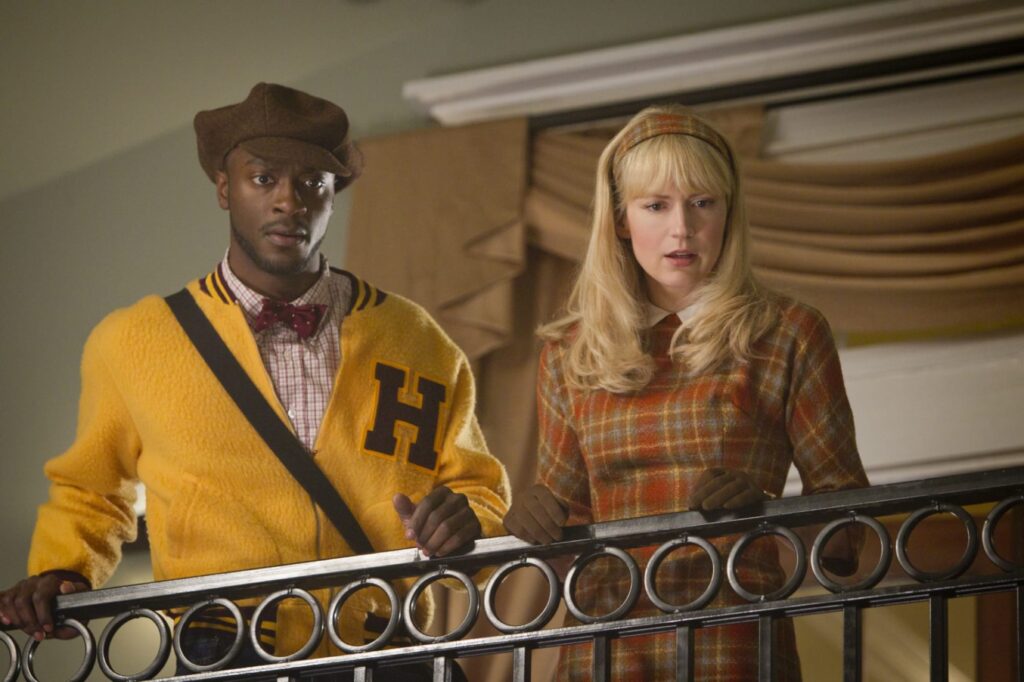
They’ve become the equivalent of a weighted blanket or our favorite comfy hoodie.
And streaming platforms, from Hulu to Tubi, thrive on this. Autoplay keeps us passively engaged and makes us literally lose time. Four episodes later, and you can’t even recall a plot point.
And, hey, there’s nothing wrong with this rise of background television. It’s comforting, after all.
Catering to Background TV Culture and Short Attention Spans Are Killing Storytelling
However, I also wonder how deeply it impacts storytelling. Suddenly, television has become something we use to disconnect, rather than an alternative.

What happens with the shows that actually do demand our attention? The Bear, The Pitt, and whatever else prestige television that still generates enough discussion to matter in this landscape.
Now, TV is being designed more and more for passive consumption. Shows are shorter, faster, snappier, and more memeable. Dialogue is simpler. Pacing is quicker. Emotional complexity takes a backseat to rewatchability.
Quiet moments? They’re mostly a thing of the past. Subtext? Completely lost on many viewers now. Monologues? Sadly, viewers don’t have the attention span for them.
The result? We’re getting more TV, but less that lingers.
Background TV is great for the soul, but it’s the absolute worst for storytelling.

Are We Watching to Watch or Just to Check Out?
It’s a tough situation all around. I have conflicting thoughts about it, because I love my background television. Why on earth would I ever want to be alone with my own thoughts?
But then it makes you ponder things. Like how often we watch television with another screen in our hand? Have you ever sat down to enjoy a show, only for the person beside you to endlessly scroll through reels or blast TikTok videos mid-episode?
It’s awful! But it’s also what we’ve become as viewers.
Sure, it’s infinitely easier in a world of excess and way too many choices to pop in something familiar when you’re ready to eat dinner and relax, but at what cost?

At what point does our comfort background television become a crutch? When do we stop discovering new stories because we’re stuck looping the old ones?
Are We Missing the Magic of TV?
And can we really continue to complain about the absence of great stories when creators are now catering to our dwindling attention spans, overstimulation, and defaulting to multitasking rather than enjoying their art?
Broadcast, when it gives us scripted content, is feeding us an endless stream of low-stakes, minimal-thought procedurals. Most streamers pad themselves with easily consumed comfort series and repetition.

And maybe that’s why it feels like real gems — the ones that actually make us put our phones down for 45 minutes and lock in — are rare, far and few between.
Because are we actually watching anymore … or just pressing play?
And if we’re watching without really watching, does that mean we’re missing out on the magic that made us fall in love with TV in the first place?
It takes a lot to keep indie sites like ours running — and you can help.
Comment if you care, share if you dare, and maybe even whitelist us in your ad blocker — no pressure, just appreciation.
-

Twisted, Timely, Brilliant: Why Mr. Robot is the Perfect Binge
The Award-winning Mr. Robot dropped on Netflix, and it’s the perfect, timely binge for a whole new audience. Here’s why you NEED to watch!
-
Two Seasons into ER, I Hate Shep So Much You Have to Hear About It
Two seasons into my first ER watch, and Shep is the absolute worst character, and I’m sick of it. Rant loading…
-

Don’t Ruin My Childhood, Netflix: Land of the Lost Is Back in Development
Netflix is developing a reboot of Land of the Lost with the original creators on board — and one Gen X fan has feelings. (Spoiler: It involves Sleestaks, strawberries, and a baby dinosaur.)
-

Back Then, But Make It Now: How Gen X Nostalgia Is Fueling the Coolest TV
Explore how TV shows like Pam & Tommy, Glow, and For All Mankind capture Gen X nostalgia without the cringe. A look at the shows that honor the past while inviting in new generations in.
-

Carissa’s Corner: The Power of Long-Running TV — and Why We Should Revisit It Together
TV isn’t built to be disposable—and shows like Six Feet Under prove it. Let’s rediscover the value of long-running series with a summer rewatch that celebrates the kind of storytelling streaming often forgets.
TV Fanatic is searching for passionate contributors to share their voices across various article types. Think you have what it takes to be a TV Fanatic? Click here for more information and next steps.
The post The Rise of Background TV: Are We Even Watching Anymore? appeared first on TV Fanatic.